

The Project
Goals
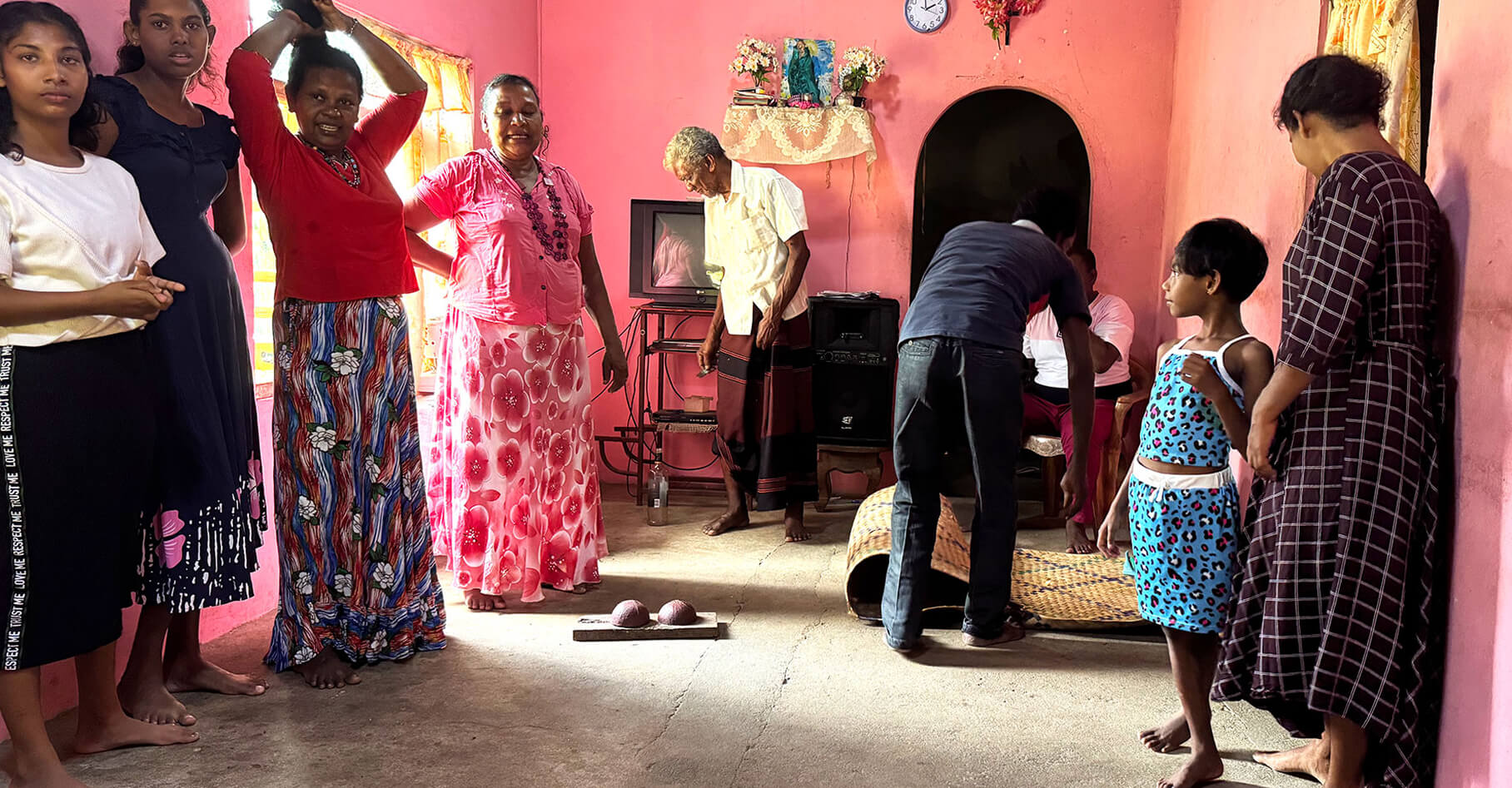
We are a multilingual, multicultural research team documenting Sri Lanka Portuguese, a critically endangered language spoken among Afrodescendant communities in north-western Sri Lanka.
With UKRI funding, our project focuses on manja, the only surviving expression of African heritage for these communities. By combining language documentation, analysis, and historical reconstruction, we study language change and contact while helping communities recover, preserve, and share their linguistic history.
The Team
We are a research team with diverse cultural and linguistic backgrounds complementing each other. Read our bios below!
Manjas
Manjas are songs performed by the Sri Lankan Afro-Portuguese communities. Manja is the only remaining African (possibly Mozambican) heritage of these communities. Crucially, however, manja is absent from the (post-)colonial narratives. Cultural praxis in manja has been a strictly in-group activity until a former Sri-Lanka President brought the community from Sirambiyadiya to perform in a cultural festival in 1992. Over recent years, the community has gained some traction due to the interest in scattered African diasporas. There is no comprehensive linguistic or socio-anthropo-historical study for the manja-performing communities. Songs were recognised as a repository of language but had often been overlooked by modern and theoretical linguists.
Watch manjas we collected in January 2025:
Where we did our fieldwork
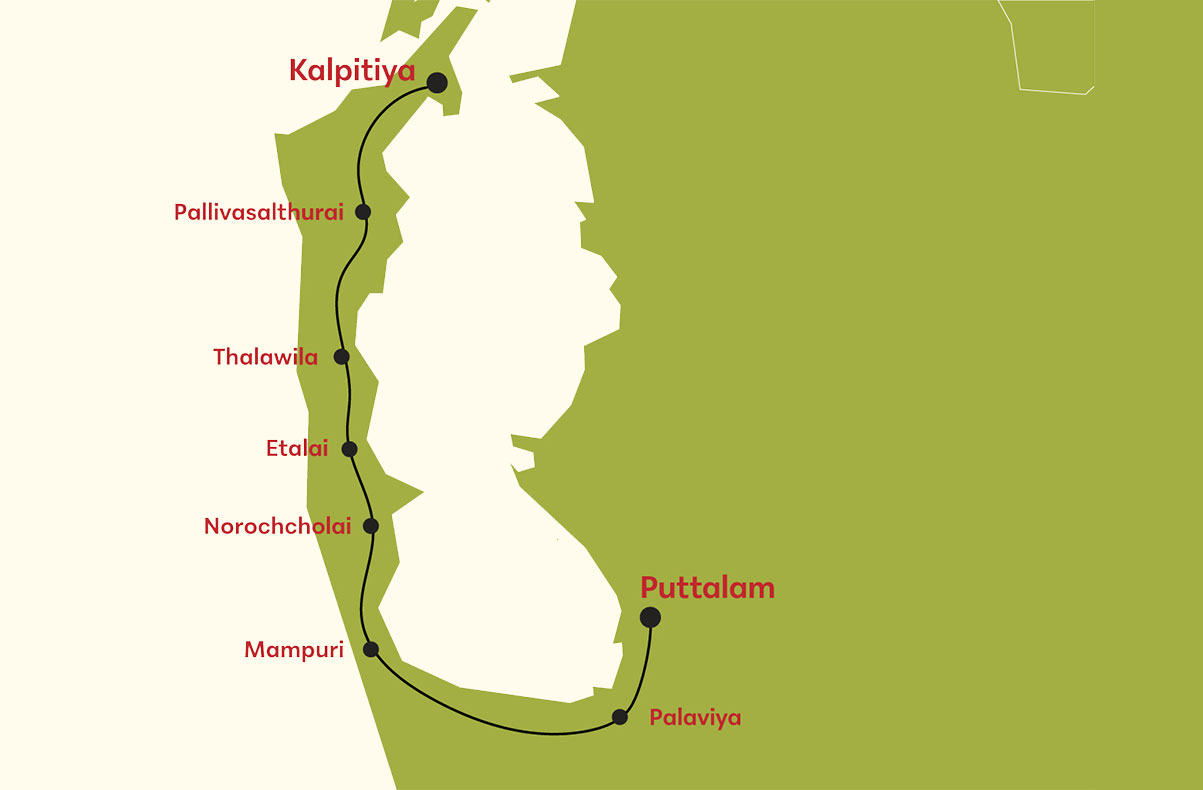
Despite Sri Lanka Portuguese being the native language for generations of Kaffir, currently the only speaker left in the village of Sirambiyadiya is 92-years old and she has nobody to speak Sri Lanka Portuguese with since everyone else has shifted to Sinhala (an Indo-Aryan language) which is the language of instruction at school—the other major language of the island being Tamil (which is Dravidian). Consequently, manja is also under threat of extinction and there is an urgent need for documentation in order to preserve the only available Afro-Sri Lanka Portuguese fragments of these communities which may contain significant linguistic cues about their African past.
This is where did our fieldwork in January 2025:
How we collect our data
Our research is positioned in the liminal space of the Global South focusing on the Indian Ocean and in particular on the interaction between the language of the colonisers (Portuguese), the African languages (from – northern Mozambique region with emphasis on nowadays – Nampula area) and the indigenous Sri Lankan languages. Although a fair deal is known about the former and the latter, records of an African presence are sparse. Thus, in terms of historical reconstruction of Sri Lanka Portuguese there are significant difficulties given the paucity of available data; it is precisely for this reason that it is imperative we try to rescue and analyse these surviving African heritage fragments, the manjas.
In doing so, we will test cue-based and socio-linguistically-informed historical reconstruction and refine our approach to language contact modelling. Moreover, we will be paving the way to understanding differences/similarities between the emergence of Creoles of the Indian Ocean versus the Atlantic Ocean, on the one hand; and how identity is reinforced through manja, on the other; thus feeding into discussion about Global South, Postcolonial/Decolonial Theory, Migration Studies, International Slavery Studies and the psycho-social benefits of preserving heritage languages and cultures.
First, however, the team recorded the community’s favourite manja songs that are usually performed for audiences. We used several different approaches to make sure we captured the songs in the most complete and natural way possible.
We asked performers to sing the songs specially for us, without an audience. This helped us see how their performance might change in a more private setting and gave us carefully controlled recordings. At the same time, we observed and recorded them in real-life situations, both in their villages and during public performances on stage, so we could document how the songs were sung in natural contexts.
We also paid close attention to social and language-related details such as which languages the performers chose to use, their age, gender, education, and occupation. We gathered this information through interviews and observation to understand how these factors influenced the way the songs were performed and remembered.
Importantly, the project aimed to go beyond only recording the most performed songs. We encouraged the community to recall and share older or less frequently sung manja songs. To support this, we used guided prompts and gentle reminders, sometimes drawing on cultural or language cues to help trigger memories of forgotten songs. Because there was only one opportunity for fieldwork, we carefully adjusted our methods on site to make the best use of the limited time available. This flexible and well-planned approach allowed us to collect a rich and varied set of recordings that reflected both everyday practice and deeper cultural memory.