Get Involved
Why it matters
Why the study of endangered and minoritised languages matters
(A few personal thoughts by the Principal Investigator, Prof. Ioanna Sitaridou, whose family history is also defined by displacement)
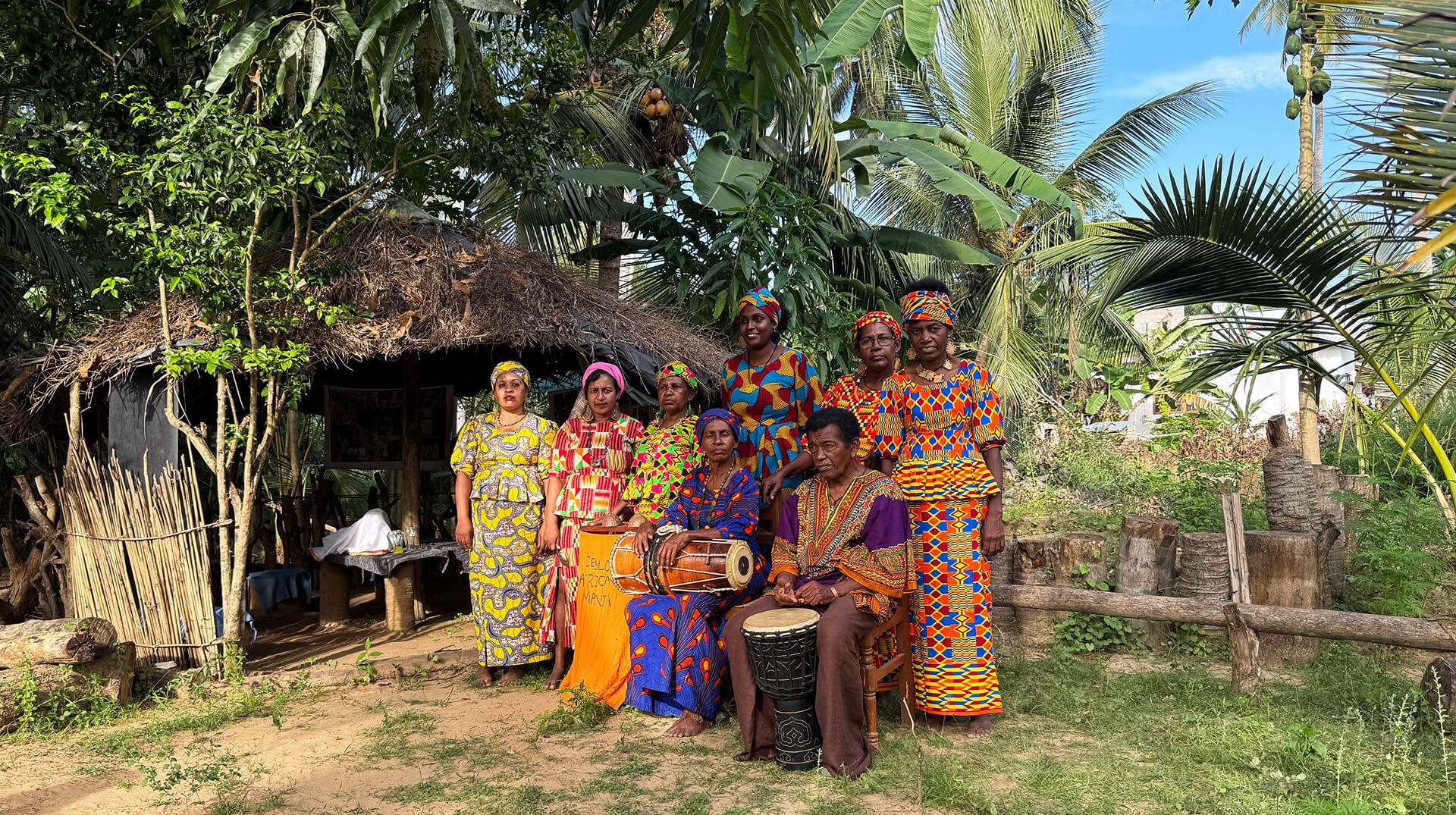
Imagine being born into a community shaped by history’s darkest chapters: slavery and displacement.
Imagine hearing your own relatives speak in a language you no longer understand. Imagine being teased at school for your coiled hair or not being the ‘right’ shade of X. Imagine being hungry.
Imagine growing up surrounded by half-memories, half-stories, half-truths, trying to piece together who you are, where you come from, and what was taken, broken, or forced into silence.
Now imagine this: Big smiles. Belongings always in the making. A fierce love of life. Resilience. Dignity. Hard work.
This is where we step in. Not as saviours, but as listeners. With cutting-edge methods, bold ideas, and deep respect, we work side by side with communities to document what is at risk of disappearing. We do not extract data. We build trust. We do not take stories. We help amplify them. While respecting orality and its capacity to sustain cosmologies. And in doing so, we honour the voices that history tried to silence, uproot, or scatter. In perfect awareness that we might get it wrong. But we are scientists and so we will keep trying.
Because every single language matters.
Every single song.
Every fragment of memory.
Every word whispered, sung, displaced, or almost forgotten. Too textured to be written down.
We document endangered languages not just to preserve sounds and structures, but to protect identity, dignity, and history. When a language disappears, a way of seeing the world disappears with it. Perhaps we would not fear such loss if every disappearance made room for something new to grow. But does it?
We strive for visibility.
For justice in memory.
For a future where no community is invisible.
For a history in which every human being gets the chance to tell their story.