About
Introduction
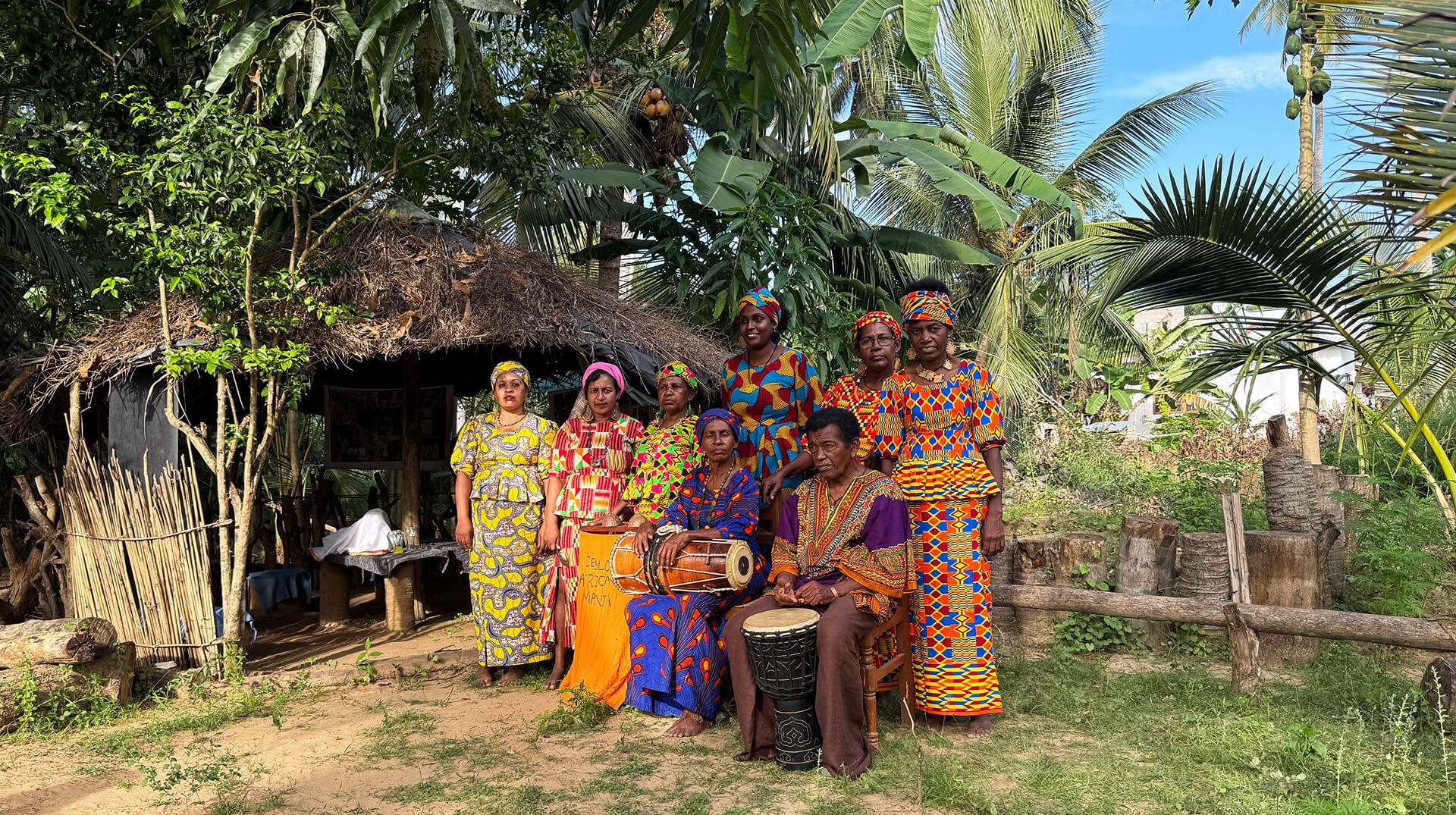
The purpose of this project is to document a critically endangered language—Sri Lanka Portuguese (SLP)—among Afrodescent communities in north-western Sri Lanka. In particular, we will focus on documenting and analysing manja, the only remaining linguistic and cultural expression of African heritage for these communities; in the words of the speakers themselves ‘Poverty is our plight and manja is our only inheritance’. We will strive to give visibility to their only inheritance through careful documentation combining state-of-the-art theorising with the ethnographic method.
Whilst the Creole language is still spoken in Sri Lanka as a mother tongue by those who identify with the Portuguese and claim to be of Portuguese descent, amongst the Kaffir (a Sri Lanka ethnic group which is probably descendant from 16th century. Portuguese traders and enslaved Bantu people whose arrival is attributed to the colonial era starting with the Portuguese in the 16th century) the language is now only encapsulated in the lyrics of their chant-like songs called manja. Manja is the only remaining African (possibly Mozambican) heritage of these communities. Crucially, however, manja is absent from the (post-)colonial narratives.
Cultural praxis in manja has been a strictly in group activity until a former Sri Lanka President brought the community in Sirambiyadiya to perform in a cultural festival in 1992. Over recent years, the community has gained some traction due to the interest in scattered African communities globally. Despite SLP being the native language for generations of Kaffirs, currently the only speaker left is 92-years old and she has nobody to speak SLP with since everyone else has shifted to Sinhala (an Indo-Aryan language and language of instruction at school)—the other major language of the island being Tamil (which is Dravidian). Consequently, manja, and its ‘precious’ words and structures from African languages such as Emakhuwa, possibly CiYao, and Kiswahili, is also under threat of extinction.
If we do not act now, we shall forever miss the opportunity to understand language formation in this liminal space of the Global South where the language of the colonisers (Portuguese), the African languages (from the Nampula area) and the indigenous Sri Lanka languages came into contact. Although a fair deal is known about the former and the latter, records of an African presence are sparse.
Our project, through an in-depth analysis of the manjas and wide-scoping synthesis combining fieldwork data with data mined from archives, will be developping socio-acquisitionally appropriate scenarios. The end-result would be a plausible reconstruction of the formation of African-Sri Lanka Portuguese. In doing so, we will test cue-based historical reconstruction and refine our approach to language contact modelling. Moreover, we will be paving the way to understanding differences and similarities between the emergence of Creoles of the Indian Ocean versus the Atlantic Ocean, on the one hand; and how identity is reinforced through manja, on the other; thus, feeding into discussion about Global South, Postcolonial/Decolonial Theory, Migration Studies, and International Slavery Studies. Most importantly, however, we will be empowering speakers to continue performing manjas and enacting their mixed and multiple identities which will yield important psycho-social and cognitive benefits for the local, national and transnational societies.
History of the Community
Whilst the Creole language is still spoken in Sri Lanka as a mother tongue by those who identify with the Portuguese and claim to be of Portuguese descent, amongst the Kaffir (a Sri Lanka ethnic group which is partially descendant from 16th C. Portuguese traders and enslaved Bantu people whose arrival is attributed to the colonial era starting with the Portuguese in the 16th century) the language is now only encapsulated in the lyrics of their chant-like songs called manja. Manja is the only remaining African (possibly Mozambican) heritage of these communities. Crucially, however, manja is absent from the (post-)colonial narratives.
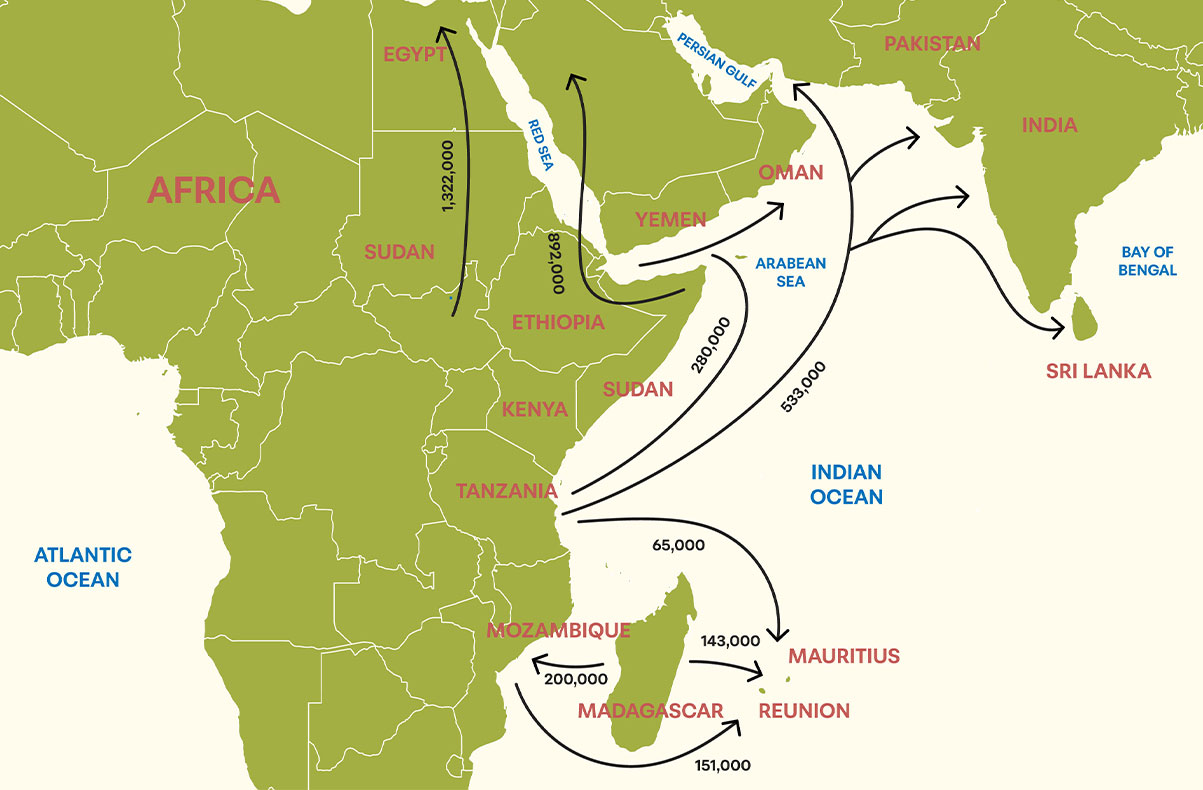
Map: Origin of Afrodescent Sri Lanka communities based on the Atlas of the Trans-Atlantic Slave Trade by David Eltis and David Richardson (Credit: Michael Siegel, Rutgers Cartography)
In the Speakers’ own words
Context: A member of the community who remembers how their ancestors were brought to Sri Lanka narrates in Sinhala:
“ඉස්සරලා අකමැත්තෙන් නේ ගෙනත් තියෙන්නේ, සාමාන්යයෙන්. අකමැත්තෙන් වුනත් දැන් අපි කාට හරි බාරව ඉන්නවානම් එන්ඩ කියන කොට එන්ඩ වෙනවානෙ. එන්ඩ වෙනවා. අපිට වුනත් දැන් කවුරු හරි අපි දැන් බාරව ලොකු කෙනෙක් ඉන්නවා කියමුකො, එන්ඩ කිව්වොත් එන්ඩ වෙනවානෙ. ඇවිල්ලා ඒගොල්ලන්ගෙන් වැඩ ගත්තා. ඊට පස්සෙ අවසානෙට එක්දාස් අටසිය දාහතේ තමා අර යුද්දෙ දින්නට පස්සෙ, ඊට පස්සෙ තමා අපිට ඉන්ඩ තැන් දීලා ආණ්ඩුවෙ රස්සාවල් දීලා අපිව ලොකු පිලිගැනීමක් තිබුනෙ.”
English translation:
At first, generally, we were brought here unwillingly. Even though unwilling, if someone was in charge of us, and he/she asks us to come, we have to come. We have to come. Now, even for us, let us say we are dependent on a big person who tells us to come, then we must come. On arrival, they took work from them. Finally, in 1817, after that war was won, they were given places to live, government jobs, and a great deal of acceptance.
Context: Another member of the community talks about her grandmother speaking “Portuguese”:
එයා දැනට ගොඩක් කථා කරන්නෙ නැහැ. හිටපු ගමන් මතක් වුනාම කියනවා, භාෂාව එනවා.
English translation:
“She does not speak much [Portuguese] now. All at once when she remembers [Portuguese], she speaks in [Portuguese]. The language [Portuguese] comes [to mind].”
The member also remembers her great grandmother speaking and singing in “Portuguese”:
එයා නම් ගොඩක් කථා කරා අපි දැනුවත්ම. සින්දු එහෙම අපි පොඩි කාලෙ ඉතින් එයා කියනවා… එයා කතා කරනවා මතකයි අපිට. කොහොමහරි එයා මැරෙනකොට මට අවුරුදු දොලහක්, ඒ වගේ විතර. ඉස්කෝලෙ යනවා එතකොට.
English translation:
“We [I] remember her speaking a lot [in Portuguese]. When we were small, she used to sing [Portuguese] songs. ..We [I] remember her speaking [in Portuguese]. Anyhow, when she passed away, I was about twelve years old. At that time, I was attending school.”
Gallery